 By Canon Mike D Williams
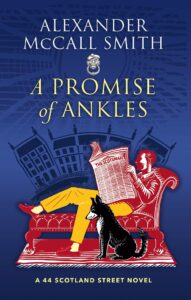
At the heart of Edinburgh’s Georgian New Town is 44 Scotland Street. Three spacious flats are the centre of a series of stories by Alexander McCall Smith that evoke contemporary Edinburgh life. This is the thirteenth book, but it works as a stand-alone novel with the variety of characters, their everyday struggles and joys. McCall Smith is an Edinburgh resident, a former Professor of Medical Law and now a prolific author.
There are multiple storylines full of wit and warmth. In the top flat lives the artist, Angus Lordie, and his anthropologist wife, Dominica, with their dog, Cyril. It is Cyril who is constantly tempted by the promise of nipping the ankles of visitors or patrons at Big Lou’s café where other characters meet.
My favourite is Bertie Pollock in the middle flat. Bertie is the young son of Irene and Stuart. He is much loved (and much put-upon) by his mother who over the series of novels becomes increasingly ‘progressive’ in her views and leaves home to study psychotherapy in Aberdeen leaving Stuart and Bertie with a newfound sense of freedom. My appreciation of Bertie is that he attends my old Rudolf Steiner school, which is wonderfully described in previous stories. Bertie and his friend Ranald have a chance of attending a school in Glasgow for a month. Glasgow holds out all sorts of possibilities for Bertie and his excitement grows.
Nicola, Bertie’s grandmother takes Bertie and Ranald to Glasgow and on the way visit the ‘Inclusive Pie’ factory inherited by Nicola from an aunt. There they see a new mixing machine for the pies that Bertie reckons looks remarkably like a concrete mixer. A view confirmed by the inscription on the side – Property of Aberdeenshire Council Roads Department’. Whilst unhealthy the pies sell well in Glasgow along with Irn Bru.
The banter between Edinburgh and Glasgow is woven in beautifully, including the Edinburgh based committee of the Scottish Nudist Society discovering to their horror that a Glaswegian has infiltrated the committee. Other characters include Matthew and Elspeth wrestling with raising triplets in a house outside Edinburgh they bought from the aristocratic eccentric Duke of Johannesburg. The Duke’s nephew James is employed to help look after the triplets becoming indispensable but worried when the Duke disappears in his efforts to learn the Gaelic language. Matthew and James mount a nighttime rescue mission.
The novel’s gentle comedy and moments of poignancy bring a smile to readers’ faces throughout. Themes of kindness, community, and personal transformation are woven throughout the novel. The story telling is remarkable and explores the importance of small acts of compassion, the search for happiness, and acceptance of oneself and others. A relaxing and enjoyable read.