West Front Image Screen
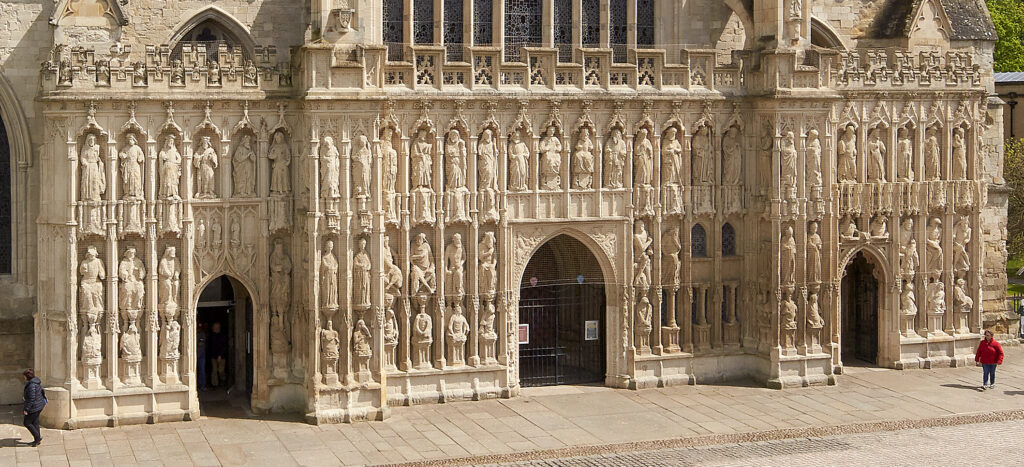
The West Front Image Screen of Exeter Cathedral is one of the great architectural features of Medieval England. The addition of the screen in the 1340s marked the completion of the re‑building of the cathedral in the Gothic style. Work continued on the image screen with the north entrance finished around 1377. The top tier was a later addition, constructed 1450-80.
Behind the screen, to the right of the Great West Door is the burial chapel of John Grandisson who died in 1369 after more than 40 years as Bishop of Exeter. When he arrived in 1327 Exeter Cathedral was a building site with the new quire and presbytery completed the following year. In a letter to the pope, he commented that Exeter Cathedral was nearly half finished and, if completed, would be admired for its beauty above every other of its kind within the realm of England or France. He then set about completing the rest of the building.
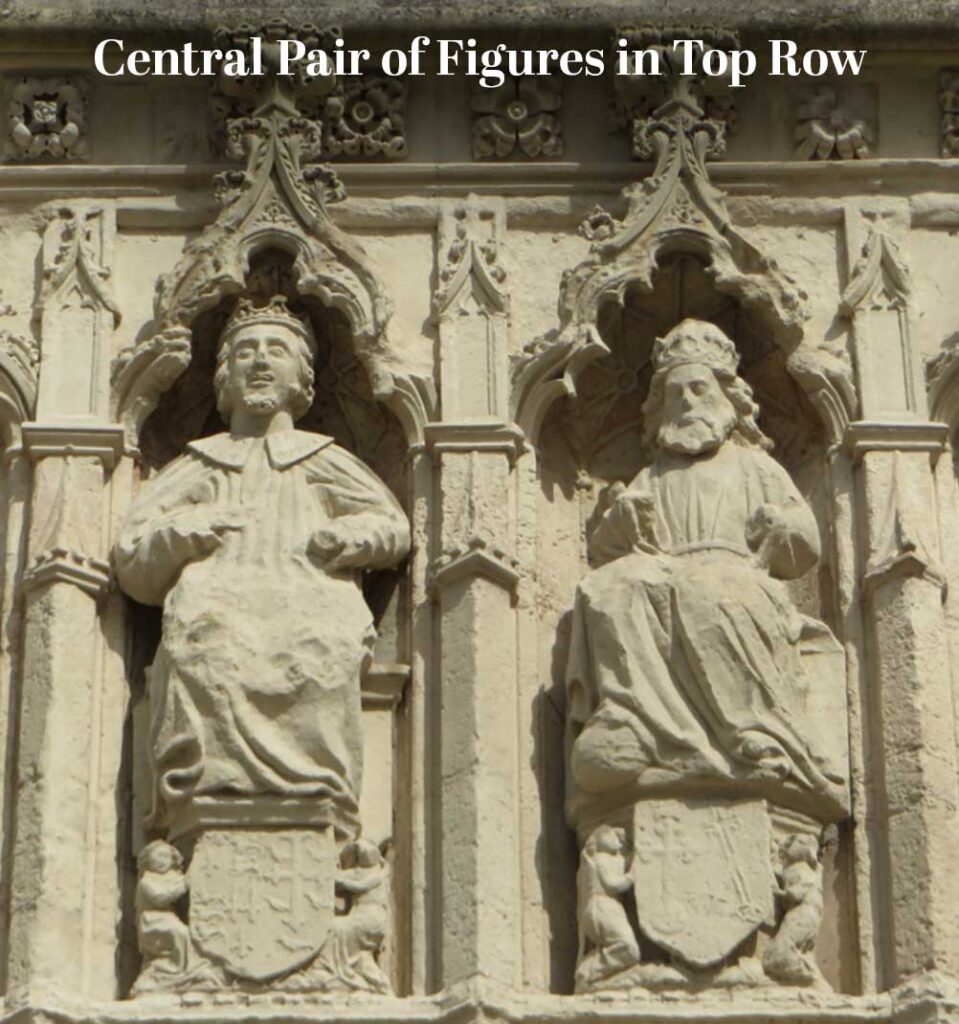
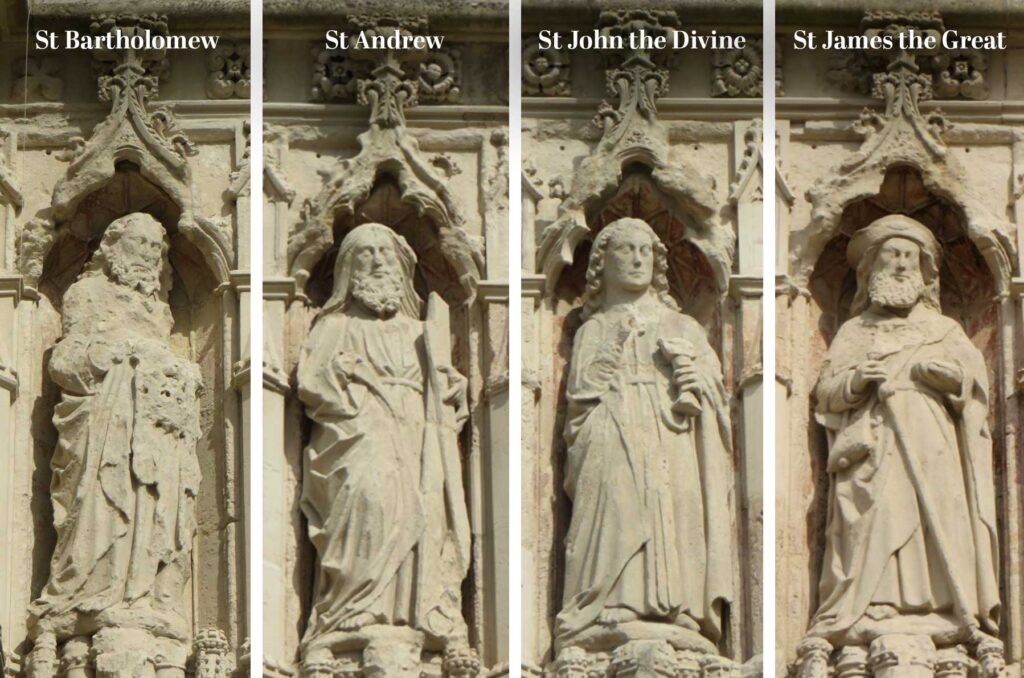
The West Front Image Screen is covered in a wealth of carving, dominated by three rows of statues in niches. At the bottom are angels appearing to support all the figures above. Dozens of figures also peer out from the battlements above and the whole screen is decorated with plants and animals. Originally, the image screen was entirely coloured and must have made a convincing vision of heaven.
Over the centuries, figures have been repaired and a few replaced. Whilst most of the screen escaped significant damage during the Reformation and Civil War, the stonework has suffered in other ways. The screen reportedly glowed red from the heat generated by large bonfires lit in front of the cathedral on 5 November in the 19th century and there was a tradition of chipping off pieces of statues which were then ground into powder used to heal sores. Pollution, the weather and roosting birds have also affected the stonework. Every five years the screen is inspected and any necessary maintenance work carried out using traditional techniques. A net now covers the screen to keep away birds.
Several schemes have been put forward suggesting identities for the collections of figures. However, only a limited number can be confirmed.
Click the button below for details about some of the figures.