Great East Window
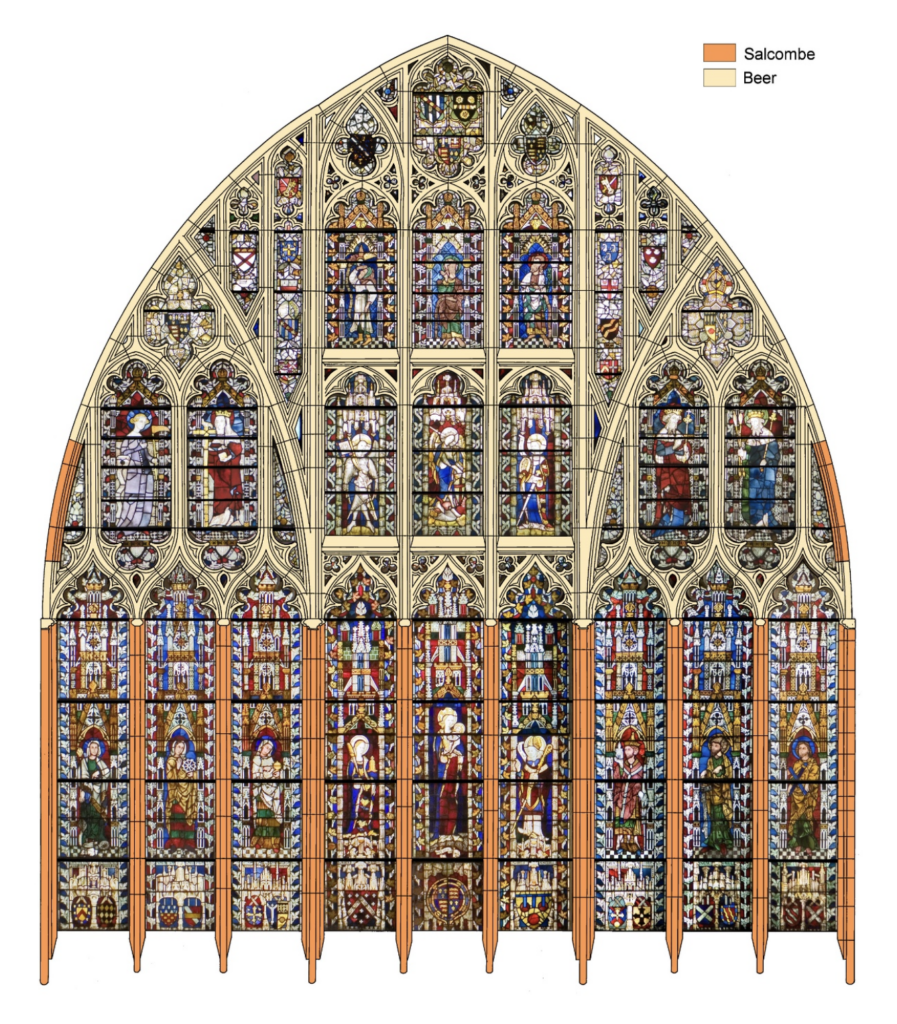
Composite image by Tony Ives
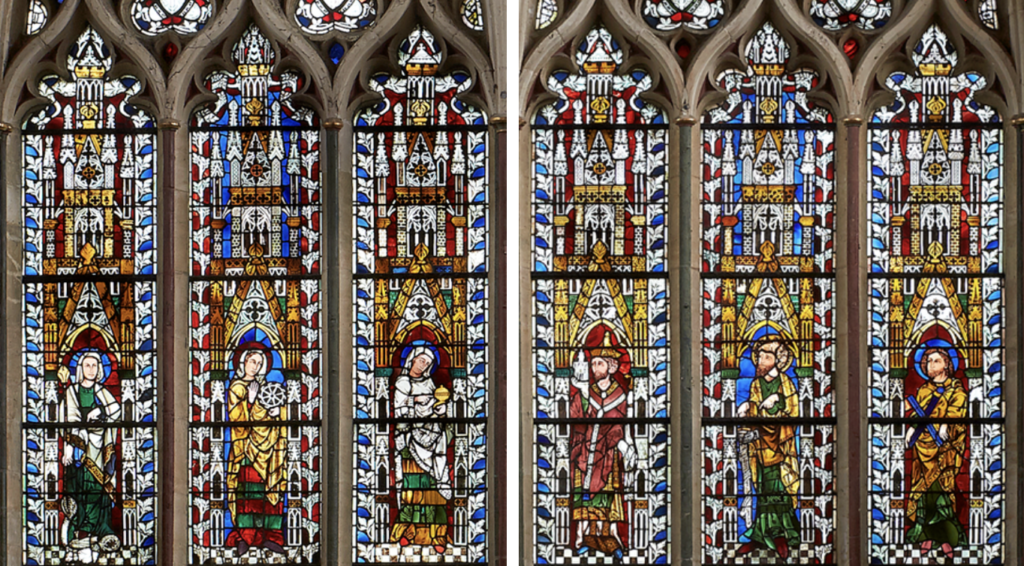
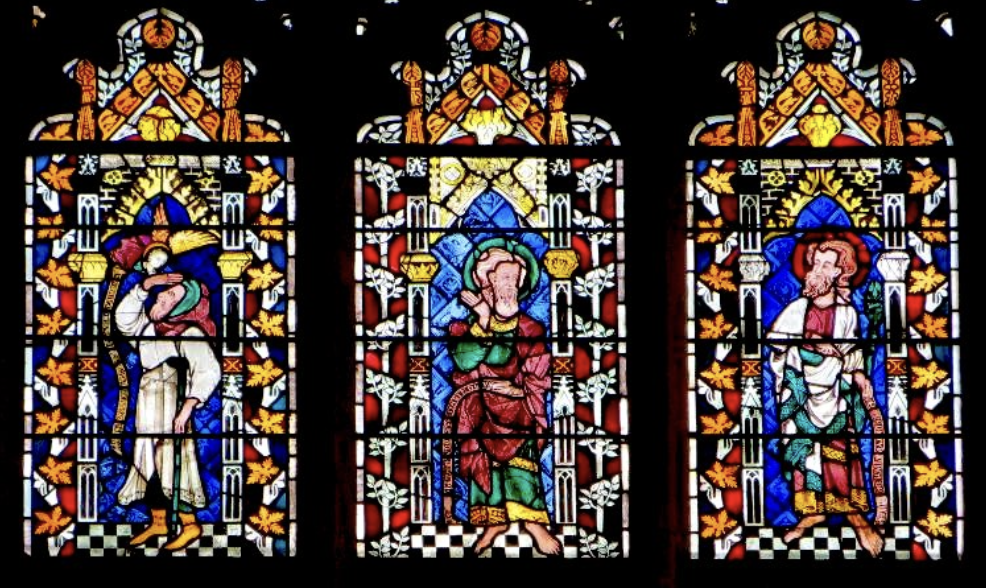
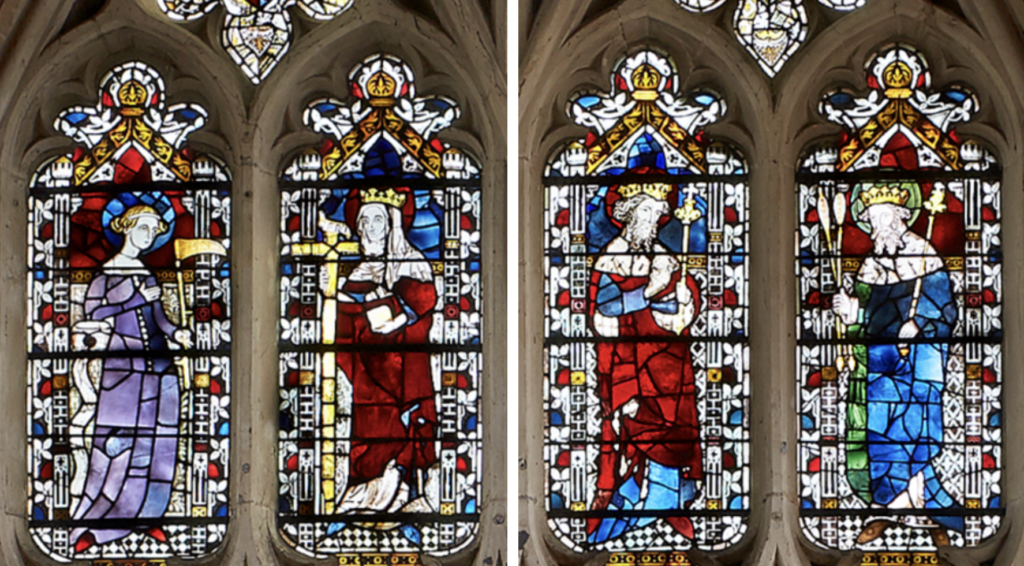
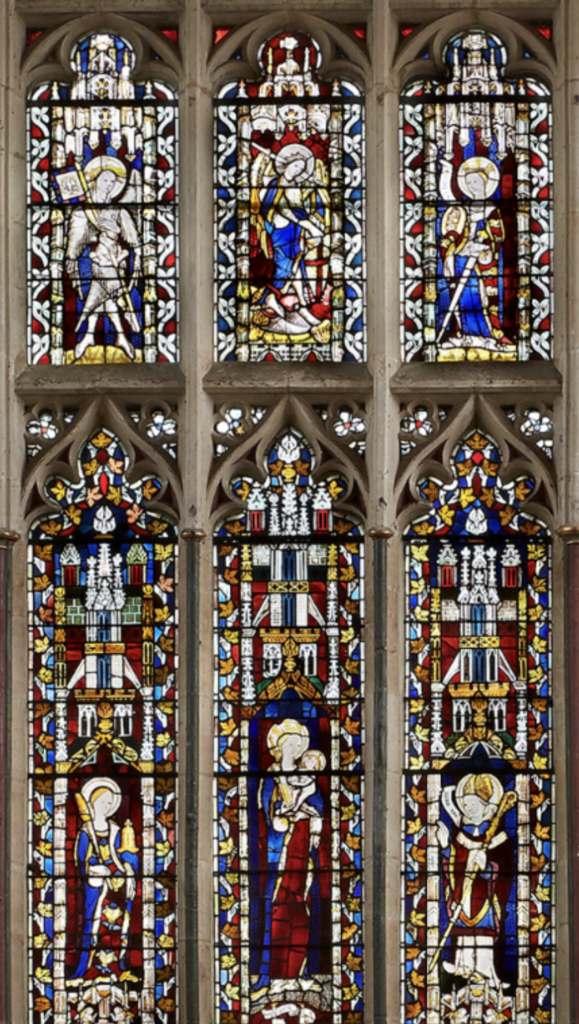
Above the pair of arches behind the high altar soars a splendid display of stained glass in the Great East Window. Much of this glass, including the nineteen figures, is medieval.
The stonework forming the tracery of the Great East Window was built at two different periods, nearly one hundred years apart. In the image above, the areas coloured brown indicate the locations of Salcombe stone from the surviving parts of the window constructed around 1300. By 1390 much of the stonework of the original window had become unsafe. A new window was constructed using Beer stone (shown above in cream) for the new upper parts. When this window was glazed in 1391 some of the original glass was kept and new glass was introduced.
The medieval glass now in the Great East Window is from different periods and not all was made for this window. The many coats of arms are of bishops, royalty and prominent families.
On several occasions during the Reformation and the Civil War, the cathedral’s windows were damaged. When the Great East Window was repaired in the middle of the 18th century, sections of glass from elsewhere in the cathedral were inserted. Some was transferred from the chapter house and some from the Lady Chapel and retroquire.
In the late 19th century further work was carried out on the glass in the Great East Window. New surrounds were inserted around some of the figures and around the shields along the bottom of the window. This work was inspired by the original decorative patterns surrounding the figures of six saints which were part of the initial glazing scheme of around 1304. Angels holding medieval shields and other new glass was inserted in the upper parts of the window during this restoration.
In September 1939 the 19 panels containing historic glass were removed from the window and on 4 October the carefully packaged glass was taken to a safe location near Tavistock for storage during the war. During the Exeter blitz most of the later glass which had been left in place was damaged beyond repair. When the ancient glass was restored in 1948, further historic heraldic glass was inserted to replace the upper sections which had been lost.
Six figures and their surrounds date from the glazing of the original window by Walter the glazier around 1304. Three further figures date from this same time but originate from elsewhere in the cathedral. Four figures date from the glazing of the new window by Robert Lyen in 1391.
Click below for the identities of the 19 figures in the window.