Exeter Rondels
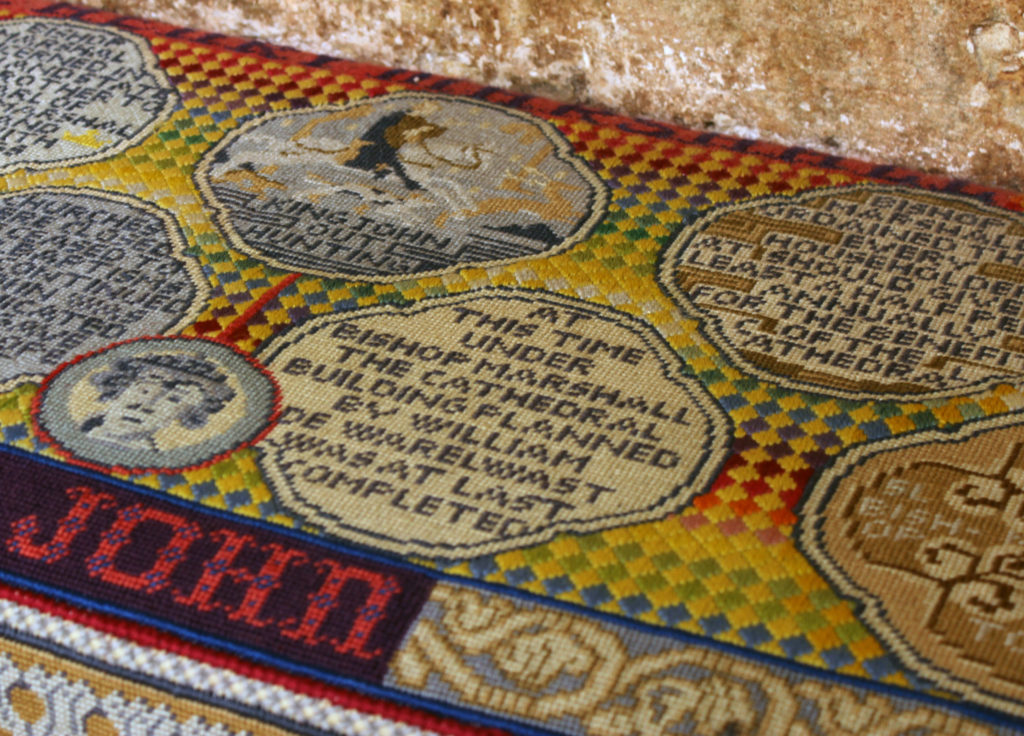
The Exeter Rondels take the form of a series of embroidered cushions, over seventy metres in length, lining the sides of the nave in Exeter Cathedral. Greater in length than the famous tapestry at Bayeux, the Exeter Rondels are a magnificent achievement, stunning in the brilliance of their design and conception.
In 1983, Marjorie Dyer, a leading expert in embroidery design, was commissioned to design cushioning for the seat-level stone plinth running along the north and south sides of the nave. Her design features rondels, as a stylised form of the quatrefoils piercing the balustrade of the clerestory. Marjorie Dyer was awarded the MBE in appreciation of her work.
65 embroiderers from the Cathedral’s own Company of Tapisers took part in the project, working on 76 stitched panels which were used to create 31 sections of cushions. The design contains 14 million stitches of 9 different techniques, worked in 73 different colours of wool. The total length of the work is 72 metres, nearly 4 metres longer than the Bayeux Tapestry.
A supporting team included wool organisers who ordered and checked the wool to keep the embroiderers supplied. They also reduced the supplied wool from 3 strands to 2 required for the work. Large embroidery frames were made by the cathedral carpenter and an assistant, and an upholsterer with his staff made the actual cushions.
The Exeter Rondels took many years and thousands of hours to complete. Work began in 1983 and the completed cushions were laid in place on St Peter’s Day, 29 June, 1989.
720 rondels are used to illustrate two thousand years of history, depicting events of local, national and ecclesiastical significance in words and pictures. Visitors walking through the nave can follow the main events of the past, told through the words and pictures interwoven on the Rondels. Every monarch is recorded along with the Deans and Bishops of Exeter together with their dates. Battles, coronations and great events of British history are all revealed through this richly-coloured tapestry
The chronicle starts with Roman Exeter, showing a map of the city as it was in the fourth-century together with locally-found Roman artefacts. These are the first elements located at the start of the cushions at the west end of the north aisle. At the east end of this aisle, the last rondel contains text about William Caxton translating into English Recueil des Histoires de Troye, the first book to be printed in the English language, during the reign of King Edward IV, when George Neville was Bishop of Exeter and Henry Webber was dean.
This links to the east end of the cushions along the south aisle ledge where Caxton’s trade mark is contained within a rondel. The last event recorded, at the west end of the south aisle, is the visit of Queen Elizabeth II to Exeter in 1983 when she distributed the Royal Maundy on Maundy Thursday, 31 March. The bishop was Eric Mercer and the dean was Richard Eyre.
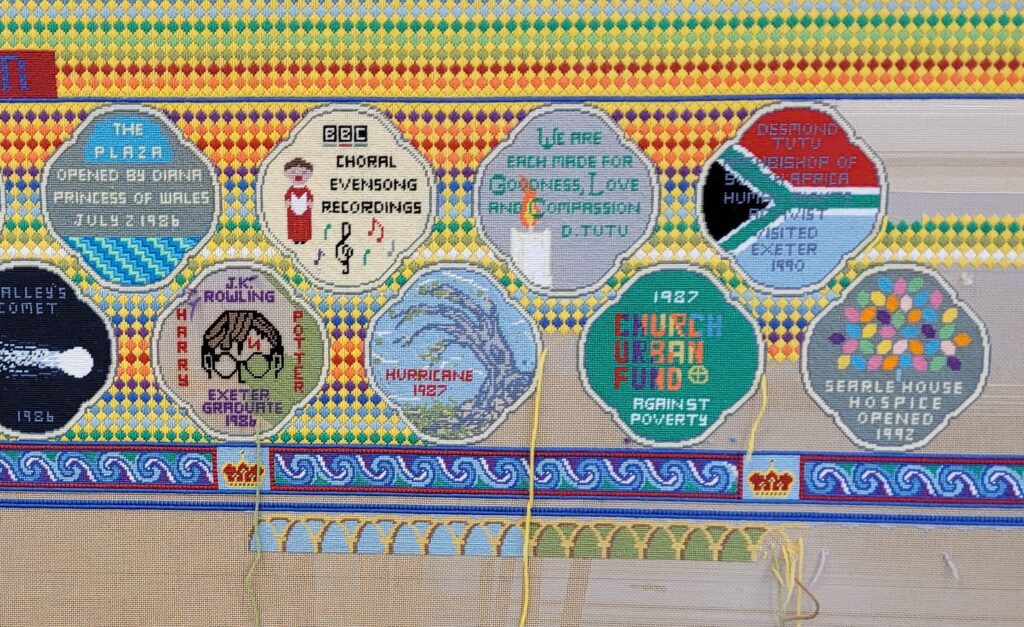
Four new cushions have been designed to fit the seating ledges along the west wall of the nave. They feature the next 40 years of events and people up to the coronation of King Charles III. Members of the Company of Tapisers have been working on these cushions since 2023 and the first is expected to be in place by Autumn 2026.