The Chapter House
When Exeter Cathedral was founded in 1050, Bishop Leofric established a secular ‘brotherhood of canons’, a team of priests to work for him and to serve the city. All the canons were equal. One served as precentor to organise the singing in the choir and another as treasurer to look after the goods of the church, but there was no dean or chancellor until these posts were founded in 1225 by Bishop William Brewer. This brought Exeter into line with the form of administration adopted by other secular cathedrals in England.
The cathedral’s canons, known as ‘the chapter’ and chaired by the dean, were responsible for the organisation and operation of the cathedral. The body was known as ‘the dean and chapter’, the term still used today for the governing body of trustees responsible for Exeter Cathedral.
When Bishop Brewer reconstituted the chapter, he also gave part of the bishop’s palace gardens next to the cathedral’s south tower for the construction of a chapter house. This would provide a large and dignified administrative centre where the dean and chapter could meet at regular intervals to transact their most important business.
Building work was probably completed by 1231 when Serlo, the first dean of Exeter, died. An ancient grave just inside the main entrance of the chapter house is believed to be that of Serlo.
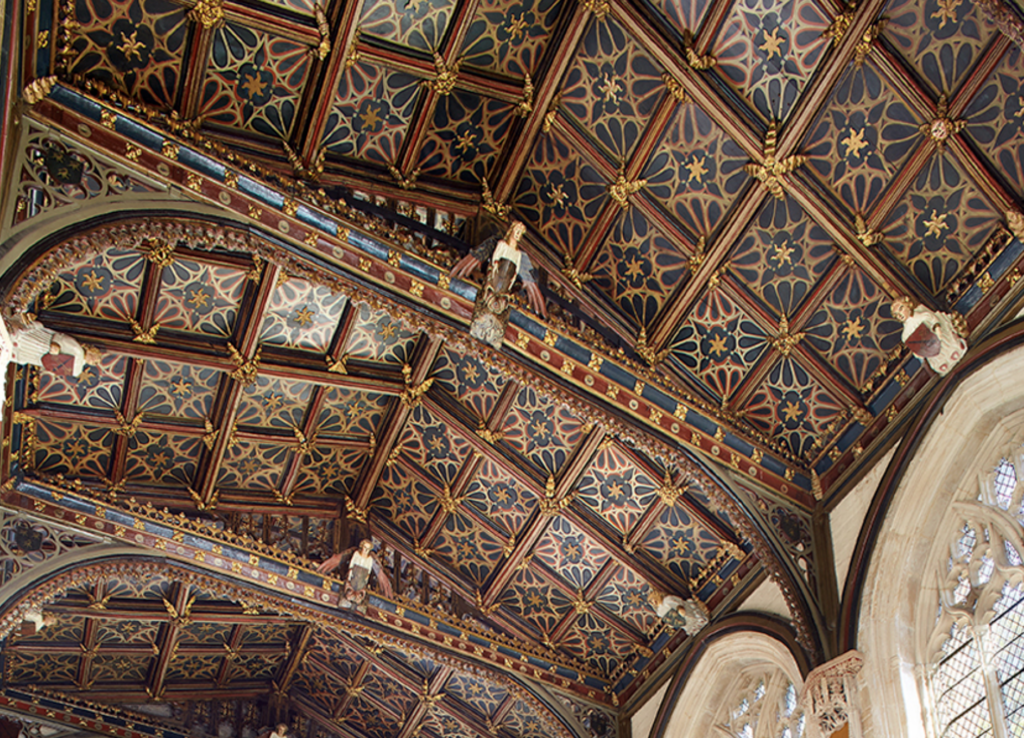
A cathedral record refers to the chapter house as a ruin in 1412/13 but without any explanation about what had happened to the building. Work started on rebuilding the chapter house which continued for several decades. The resultant building is much taller with large perpendicular windows constructed above the original arcaded lower walls. The fine wooden ceiling of tie beams and king posts also dates from the 15th century.
The dean and chapter met regularly on Saturdays and their decisions were recorded in Chapter Acts, many of which survive in the cathedral archives. These acts show that the chapter house was in continual use, except during the upheavals of the 17th century when the cathedral ceased to function for nine months in 1642/43 (during the Civil War) and then between 1646 and 1660 when cathedrals were abolished by parliament during the Interregnum of the Commonwealth period.
The cathedral library was housed in the chapter house from around 1820 to 1939. Chapter no longer meets in the chapter house which has been used for other purposes for several decades. The cathedral’s café is currently located here.