 By Ellie Jones, Cathedral Archivist
In 19th century England the average life expectancy was just 35-40 years (it is now double that). Although it seems alarmingly low, this figure reflects high infant mortality rates at the time, and the most common age at death for adults was actually about 70 – the biblical “Three score years and ten” (Psalm 90:10).
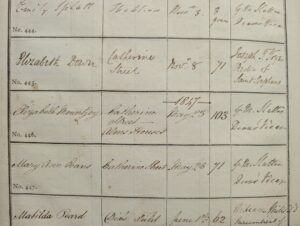
Looking through the Cathedral’s own registers, the national averages generally seem to hold true – with at least one remarkable exception: Elizabeth Mountjoy, who died in 1847 at the reported age of 103 (although other records suggest she was likely 104 and four months)!
According to the Office for National Statistics, the UK now boasts over 15,000 centenarians, with Sir David Attenborough recently joining their ranks. Historically, it was not uncommon for people to live well into their 90s but reaching the 100-year milestone was very rare until the late 20th century.
A newspaper article, written just after Mrs Mountjoy’s centenary says: “Longevity. Among the inmates of St Catherine’s almshouses, in this city (Exeter), is Elizabeth Mountjoy, who completed her hundredth year in January last. She is a widow, and has been the mother, we understand, of sixteen children. By the aid of spectacles she can read, and with the assistance of a stick she enjoys a walk”. A few years later, a notice in the local newspapers reassures us that she retained all her faculties up until the hour of death.
This month’s In Focus drop-in exhibition, ‘Hatch, Match, and Dispatch’ (1-3pm on 21 May) explores the Cathedral’s historic registers and what they reveal about individual lives and societal shifts. Don’t worry if you cannot attend, you can search our historic registers online via the genealogy platform FindMyPast, and we welcome family history enquiries. If you think your ancestors were baptised, married, or buried at the Cathedral, please do send us your questions.