 By Ian Morter, Priest Vicar
This coming Sunday we celebrate The Holy Trinity. It is the day on which we are confronted with the central tenant of the Christian faith; that we believe in one God who reveals himself as Father, Son and Holy Spirit. It is the article of faith that separates us from the other ‘Religions of the Book’ Judaism, Christianity and Islam. These three Abrahamic faiths share foundational scriptures, with deep reverence that they are the written revelation of God.
These three faiths proclaim the centrality of there being only One God, but it is only Christianity that goes on to add that the One God reveals himself in the three persons of the Holy Trinity – God the Father who is the creator, God the Son who is the redeemer, and God the Holy Spirit – who I describe as the dynamic power of God.
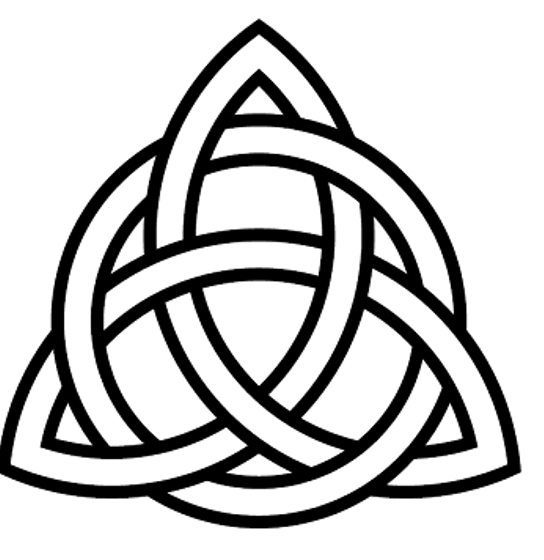
The Triquetra is an ancient Celtic pictorial way of illustrating the Holy Trinity, and helps us to understanding how our One God who are Three Persons are indivisible.
As Jesus says to the disciple Thomas (John 14:9)“whoever has seen me has seen the Father”. And later in the Gospel (John 14:15 f.) Jesus says to all the disciples “ I will ask the Father and he will give you another advocate to be with you for ever. This is the Spirit of Truth”.
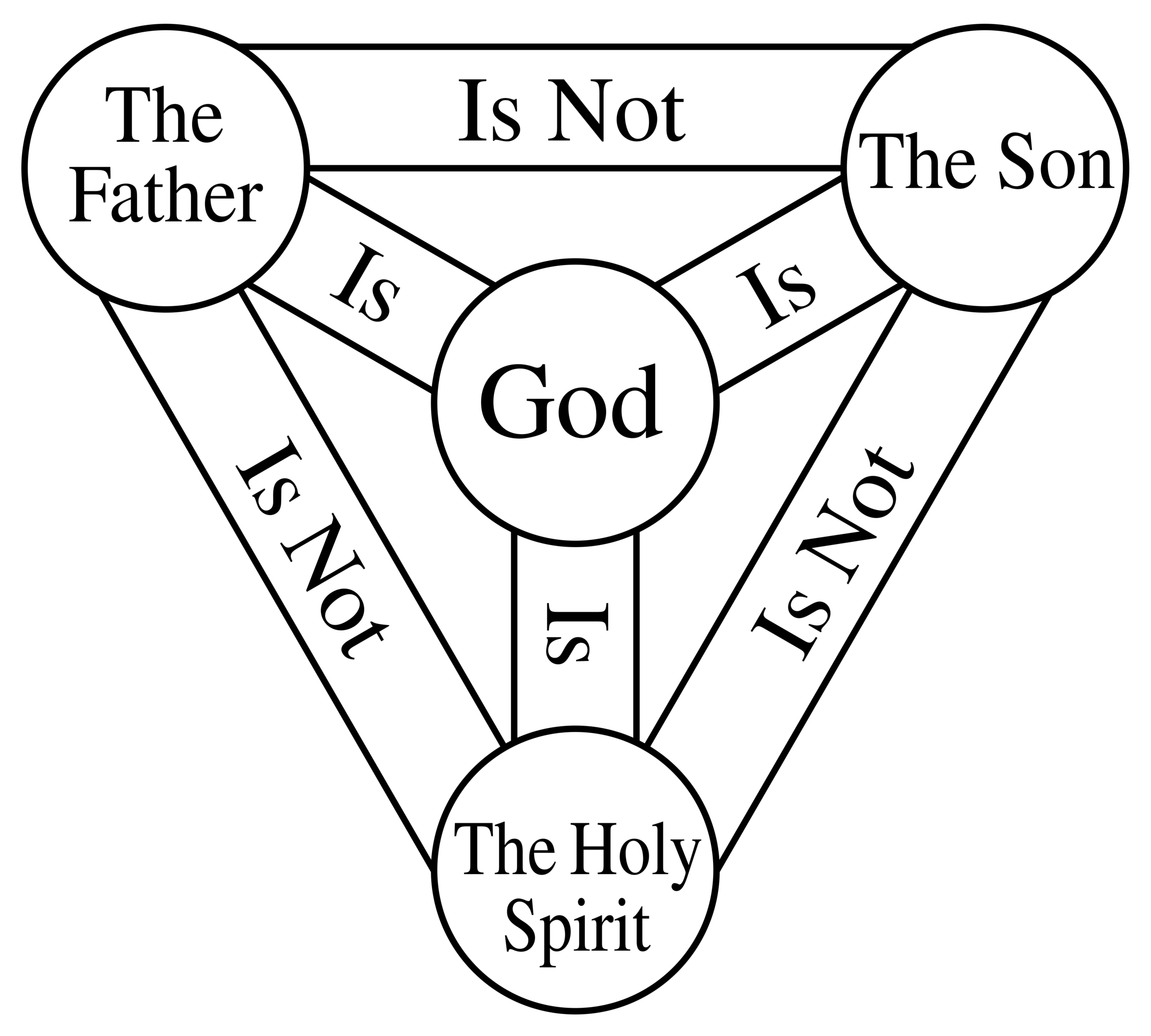 In my former parish church of Holy Trinity in Exmouth, in the atrium where the font was originally positioned, is a beautifully carved boss which also describes the nature of the Holy Trinity. We see pictorially how God is three persons, but also the distinctiveness of the each of those persons is emphasised.
In former times when Book of Common Prayer service of Matins was an important part of Parish Worship, on certain days of the year the Creed of Athanasius was recited. And that Creed, the lesser known of the three Creeds, explains in many ways, the distinctive nature of the Triune God whom we honour and celebrate on Trinity Sunday.
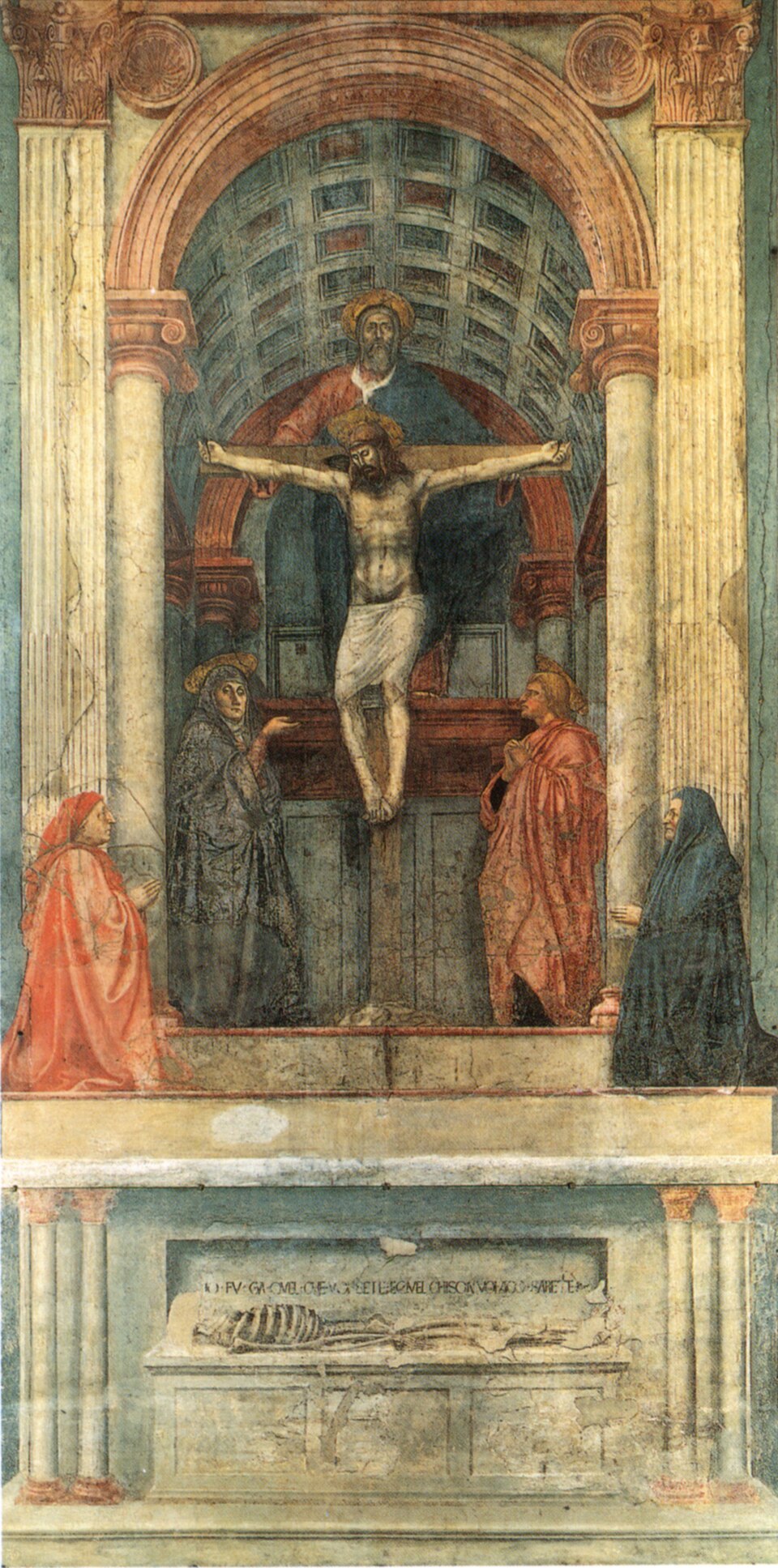 One of the most significant and moving depictions of the Holy Trinity I have seen is in the Church of Santa Maria Novella in Florence, where the painter Tommaso Guidi known as Masaccio painted this fresco between 1425-1426. This fresco of the Holy Trinity shows God the Father offering God the Son to the world. And God the Holy Spirit is depicted as a dove. The Holy Spirit is the intermediary, the dynamic power whereby the incarnated Son becomes human and is offered as the means whereby the world is reconciled to God. Kneeling in reverence, the Virgin Mary, the God Bearer, offers her son to us and is accompanied by John, the Beloved Disciple. This whole theological treaty is set within an amazing perspectival depiction of a classical triumphal arch where there is a real sense of the receding background.
So as we keep Trinity Sunday it is an opportunity to consider the article of faith which is pivotal to sacramental worship as we begin our services by dedicating our gathering in the name of the Father, and of the Son, and of the Holy Spirit.