 By Phil Wales, Priest Vicar
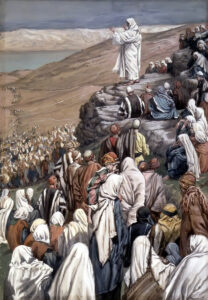
I can’t recall the first time I signed off an email or card with the words ‘every blessing’, but it has become a phrase I use quite a lot now. And I notice other people do too. Or, if not that particular phrase, then something similar, such as ‘bless you’. But what do we actually mean by it? Are we wishing someone a light dusting of spiritual icing sugar, perhaps, sending them a virtual hug (what used to be called a ‘warm fuzzy’)? Maybe we are, and that’s all to the good. But I also think we may be pointing to the counter-cultural, revolutionary nature of God’s blessing, as Jesus proclaims at the beginning of the Sermon on the Mount. To be blessed is not simply to be wished well; it is to be loved by God.
What we now call the Beatitudes are the blessings Jesus declares upon the very people who would have been looked upon as ‘unblessed’ (Matthew 5:3–12). These are the people whom others would have judged as outside the scope of God’s love. In just a few short verses, Jesus declares that God’s blessing is not reserved exclusively for those who are, by everyday standards, successful. He blesses those whom the world, and by extension, we ourselves (if we are being honest), might overlook.
The Beatitudes have been prayed and pondered for two thousand years, woven into the fabric of Christian life. Like my email sign-off, they may have become so familiar to us that they no longer jolt or stir as they once did (and still ought to do). Yet Jesus’ blessings are just as much for any of us as they were for those to whom he first preached. God blesses, for example, new parents who, after another sleepless night, feel they have nothing left to give. God blesses the worker dismissed unfairly from their identity-defining job, or the teenager who takes a wrong turn in life.
The Beatitudes matter today because they shake us out of the complacency that can set in when we only live in those places where we feel most secure. They offer us a sense of the deeper hope that comes from God when faced with circumstances we would rather avoid or cannot avoid. Perhaps, then, the next time we write or say ‘every blessing’, we might pause for a moment. Because, whether we realise it or not, we are gesturing towards a love so generous that it cannot be limited. It cannot be restricted by any thought or action on our part which tries to prescribe who may or may not be worthy to receive God’s blessing. Including, of course, ourselves.