 By Rev’d. Canon Deborah Parsons, Canon Chancellor
As I write this week’s reflection, amidst the rising clamour for the Prime Minister, Sir Keir Starmer, to step aside and allow a new leader to shape the Labour Party’s future, there appears to be a sense of déjà-vu.
In recent years, we’ve witnessed the departure of four Prime Ministers in swift succession and this week’s rallying cry seems reminiscent of the baying crowds, who called for Jesus’s crucifixion.
It’s important for leaders to be accountable to the Electorate but will another change of leader really fix the pressing issues which must surely weigh heavily on any leader in these times of geo-political, social and economic uncertainty? I suspect not. I think we live in times where there is huge pressure for politicians to say what people want to hear and what will win votes; to pander to populism and to simplify complex issues.
How refreshing and encouraging then to hear a friend share that she had recently returned from a well-attended conference in Oxford entitled: “The Good, The Beautiful and The True” with Dr Iain McGilchrist and guest speakers Dr Martin Shaw, Professor Angie Hobbs, Dr Jude Currivan, and David Lorimer.
In a world in which there is frequent “othering” and division of people in to “them” and “us,” delegates were encouraged to reflect on how they might be engaged in subversive acts of beauty. How we live out our faith matters.
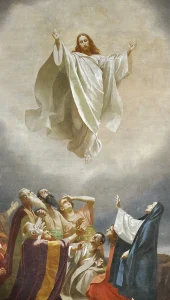
On Thursday, the Church celebrated the Feast of Ascension. Senior choristers made their annual pilgrimage to the top of the North Tower (like the abseilers last Saturday) to sing and to symbolise Jesus ascending into heaven.
Perhaps the most helpful description of Ascension Day was given to me by a member of the congregation last year, in a comment after evensong. She said: “Ascension Day celebrates the start of Jesus working from home.” In the light of the adjustments we all had to make during the Covid pandemic, her description struck a chord.
In this time between Ascension Day and Pentecost, the Church lives in a curious, in-between space. Jesus Christ has returned to the Father, and the disciples are left waiting – uncertain, prayerful, and hopeful. It’s a season which speaks deeply to our own experience of faith in daily life.
The Ascension is not about absence, but promise. Christ is not “gone” so much as present in a new way – no longer confined to one place or time, but drawing all creation toward God. The disciples are told to wait, to trust that something greater is still to come.
At Pentecost comes wind, fire, and a sudden boldness. Fearful followers become courageous witnesses. The Holy Spirit fills ordinary people with extraordinary purpose.
For us at Exeter Cathedral, this season is a reminder that waiting is not wasted time. It is in the quiet spaces – in prayer, in community, in stillness – that God prepares us for renewal. We may not see flames or hear rushing wind, but the same Spirit is at work, gently shaping us for service.
As we move from Ascension to Pentecost, may we embrace the waiting, trust the promise, and open ourselves to the transforming presence of God – ready to be surprised, and ready to be sent.
How might we engage in subversive acts of beauty