 By Ian Morter, Priest Vicar
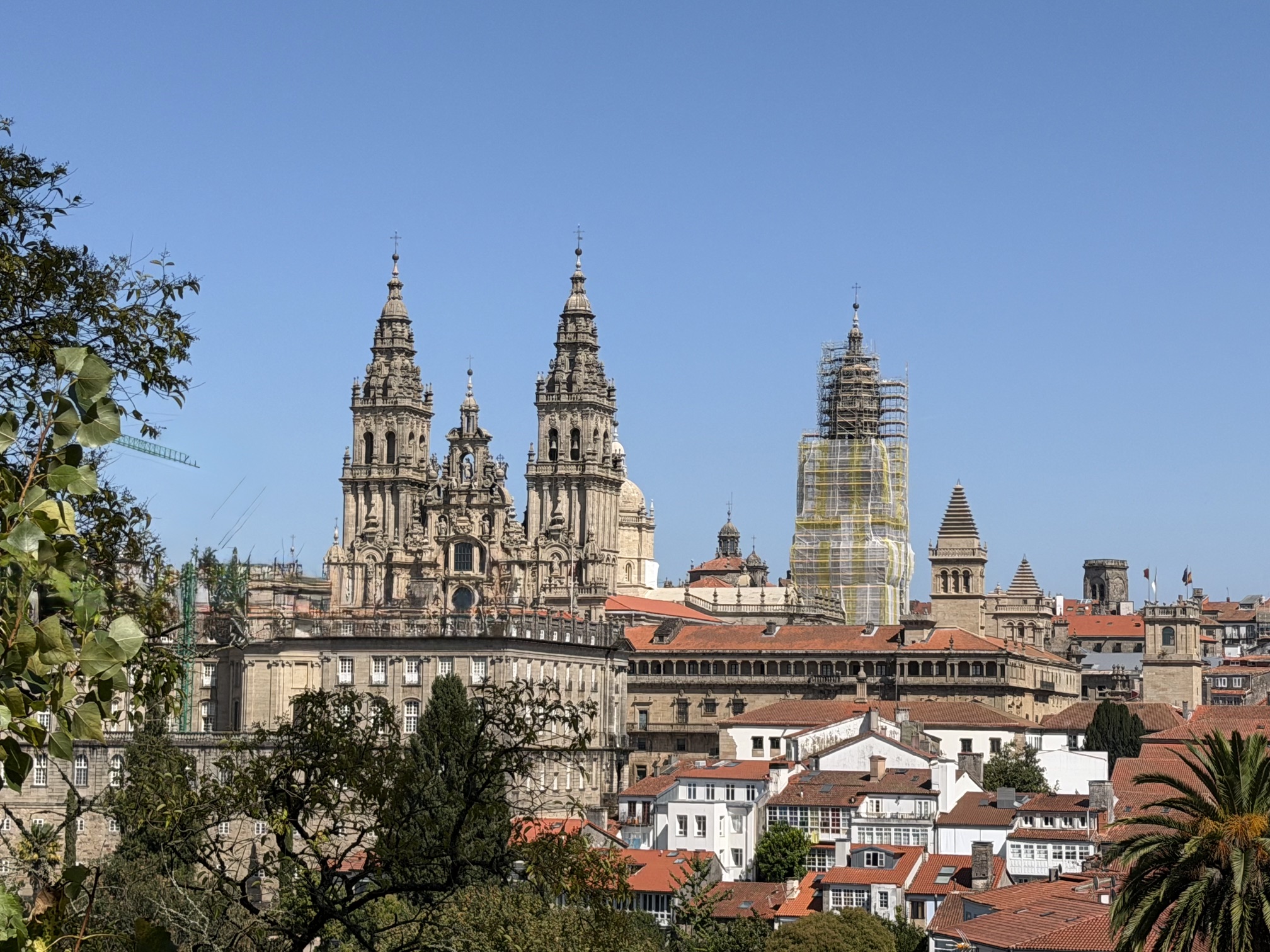
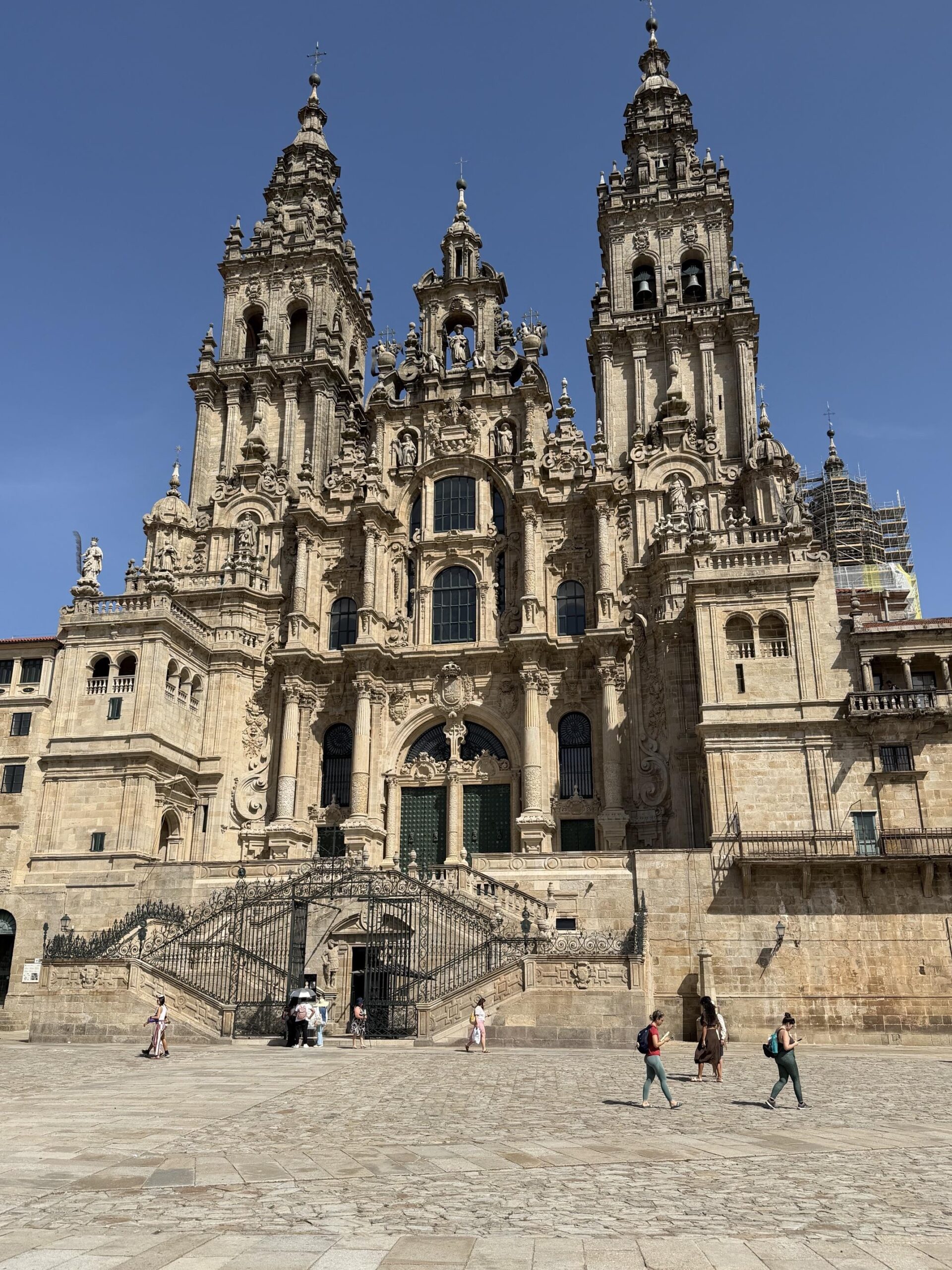
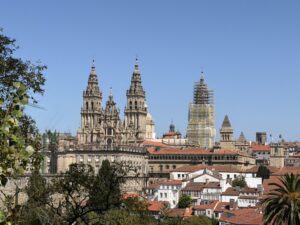
I have just returned from the Northern Coast of Spain. The reason for my trip was that I wanted to visit Santiago de Compostela which is the capital of northwest Spain’s Galicia region. For most of my life I have had an association with St James the Great and Santiago de Compostela is understood to be the final resting place for the remains of St James. The Parish Church where I was baptised and confirmed had the joint dedication of St Barnabas with St James Walthamstow. The first parish where I served my curacy in 1978 was St James the Great Colchester. So understandably St James has a special place in my Christian journey. For many years I have wanted to visit Santiago de Compostela but that has never been realised until this year. I was prompted to make the journey by Canon James Mustard address at the Patronal Festival at St James Church, Exeter. He described his first visit there a few years ago when like me he did not go on the Camino – the great walking pilgrimage route that culminates in Santiago. I travelled most of the Spanish route from the Basque region in East of Spain through Asturias and Cantabria and on to Galica using the bus service. I visited San Sebastian, Bilbao, Oviedo before arriving at Compostel. The journey took me through stunning scenery and was much less arduous than the traditional pilgrim route of the Camino which is 480 – 490 miles long and takes many week to complete.
So what do we know about St James? He and his brother St John were born into a family of Jewish fishermen on the Sea of Galilee. Their father was Zebedee and head of the family enterprise and maybe had a working relationship with St Peter and his brother St Andrew also called by Jesus to be his disciples and invited them to be “Fishers of men”. James is styled “the Great” which distinguishes him from the other apostle James “the Less” the interpretation of “great” meaning older or taller, rather than more important.
The first three Gospels tell us that James and John were preparing to fish with their father by the seashore when Jesus called them to follow him. Also the Gospels emphasis that James, along with his brother John, and Peter, formed an informal inner group among the other Twelve Disciples. This is demonstrated by Jesus allowed them to be the only disciples present at three specific occasions during his public ministry: the raising of Jairus’ daughter, the transfiguration of Jesus, and Jesus’ agony in the Garden of Gethsemane.
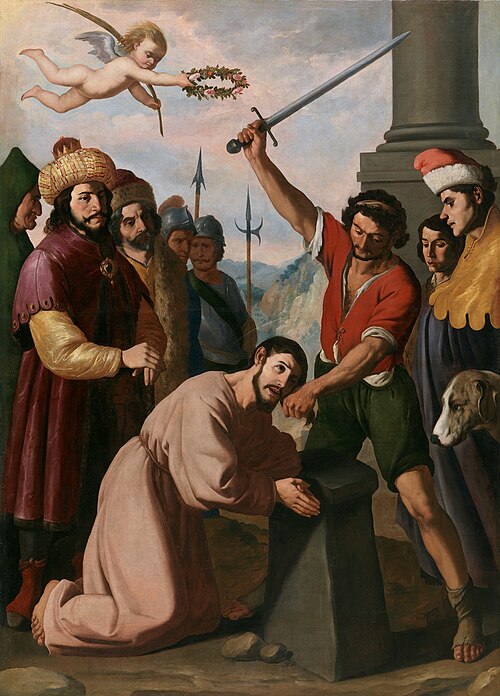
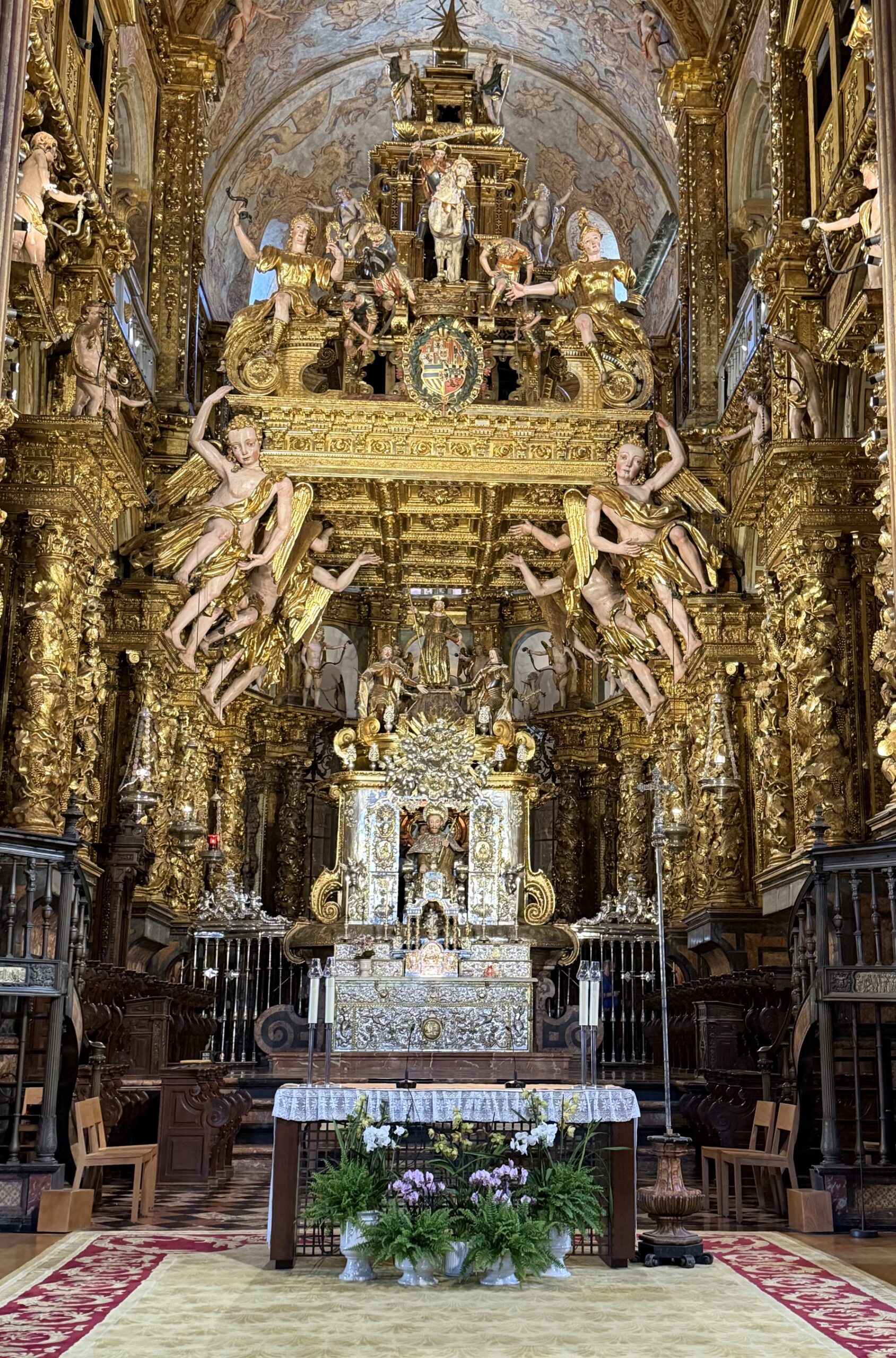
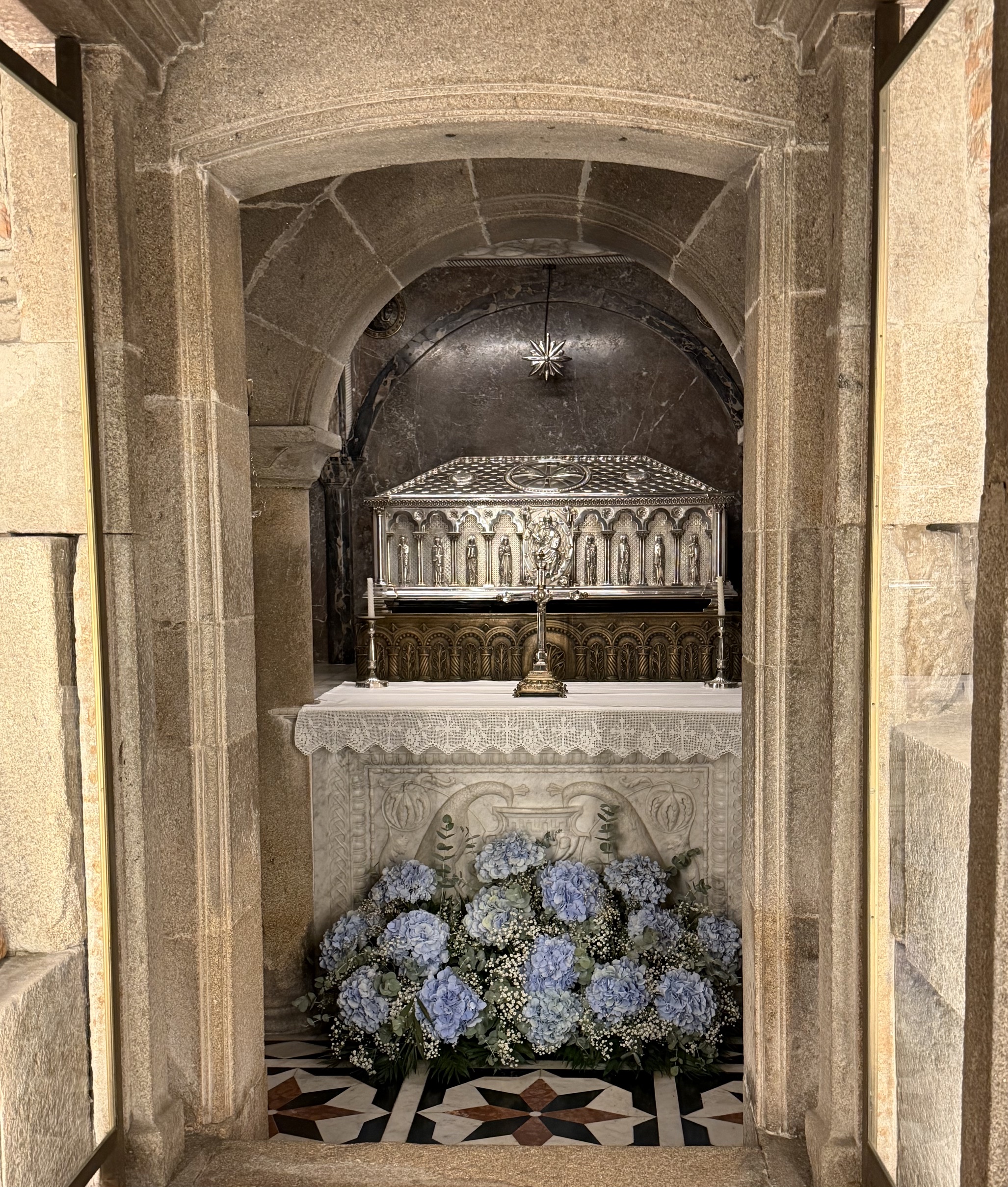
According to the Act of the Apostles James was arrested by King Herod Agrippa, imprisoned and then beheaded, he was the first of the apostles to die as a martyr in AD44. The place of St James martyrdom is located within the Armenian Apostolic Cathedral of St. James in the Armenian Quarter of Jerusalem. His head is reputably buried under the altar, marked by a piece of red marble and surrounded by six votive lamps. The legend goes on to tell that James body was eventually moved to Santiago de Compostela after his martyrdom. His followers carried his body by sea to Hispania, where they landed at Padrón on the coast of Galicia, carrying it over land for burial at Santiago de Compostela where is now buried within the magnificent Cathedral we see today which was consecrated at the beginning of the Thirteenth Century.