 By Ellie Jones, Exeter Cathedral Archivist
One of the delights of summer is packing a picnic and heading outdoors. While the picnic hamper – popular since the 18th century – remains the traditional choice for many, you may wonder about the origin of the term. Seemingly of Germanic origin, it entered Middle English in the 14th century via the Old French hanapier, a basket or case used to hold a hanap (a large precious metal goblet used for ceremonial occasions).
The Clerk of the Crown and Hanaper was a historical office of the English Court of Chancery. From the 13th to 19th centuries, it managed royal and chancery administration, including the processing of royal letters patent sealed with the Great Seal of England and the enrolment of deeds. The office took its name from the hampers used to store these sealed documents. Similarly, documents in the Cathedral Archives were kept in hampers until archival quality cardboard boxes were introduced in the mid-20th century.
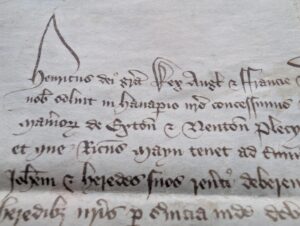
A few records in the Cathedral Archives refer specifically to the Office of the Hanaper, including a royal letter patent issued by Henry V in 1416. The original Great Seal has been lost, but the document conveys a licence to John Garton for “10 marks of silver paid into the hanaper” to settle part of the manor of Exton, Devon and Newton Plecy, Somerset and to appoint the incumbent at Hawkridge church in Somerset.
Extract from a letter from Henry V to the Chapter. The Latin form of the word “hanaper” is the fourth word on the second line.