 By Mike D Williams
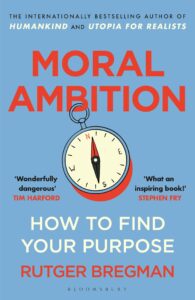
Are you wasting your life? Rutger Bergman, a Dutch historian, author and the 2025 Reith Lecturer thinks that many of us are. He argues that careers are wasted in “mind-numbing, pointless, or just plain harmful jobs”. His case is made very eloquently and rapidly in the first few pages. Yet the power of the book is in the stories he tells of people who have made a difference in the world.
He starts with a simple four type model of what you can do with your talents. First, are the not ambitious and not idealist jobs that don’t add much value to life. Second, ambitious but not idealist roles where people want to get to the top but measure success in terms of job title, salary and perks. Third, are the idealistic but not all that ambitious people who often follow their passion in generating awareness of issues but not solving problems. The fourth type combines the idealism with ambition to change things for the better. The book is then a series of well told stories about those who, by design or good fortune, have followed the path of idealism and ambition.
In 1785, Thomas Clarkson was a Cambridge student when he entered a Latin essay competition. The question he answered—and ultimately won with—was stark: Is it acceptable to force others into slavery? Winning the competition could have secured his reputation as a scholar. Instead, Clarkson realised that if his arguments against slavery were true, someone would have to work to end the practice. He became one of the first full-time abolitionists.
Other stories include the early career of Ralph Nader, a US lawyer who took on the might of General Motors to improve car safety and moved onto many other fights with big business and the government to create new laws and protect citizens. There is a wonderful chapter entitled “Learn to Weep over Spreadsheets” where a successful businessman raised money to help first one person then millions of people.
Bregman describes the “Hogwarts for Do-Gooders” in London where entrepreneurs research a socially important problem and try out solutions with mentor support and seed funding. There are lots more examples from a diplomat safely retrieving enriched uranium from Kazakhstan to Leah Garces standing up for chicken farmers, which make it an interesting read.
Rory Stewart’s endorsement of the book says it is “clear, brave, important and provocative”. Bergman rightly challenges our society where young talent is attracted into high tech and finance and less into public service or solving the climate crisis. The stories are well researched, but some are over idealistic leaving me with the impression that his ambition and idealism is out of reach for most people. Yet young or old this book does provoke – what is your purpose in life?