 By Ellie Jones, Cathedral Archivist
Fans of “All Creatures Great and Small” will be familiar with the name of James Herriot, based on the life and books of 20th century Yorkshire veterinarian James Wright which have been being adapted into popular television films and series since the 1970s. Herriot or heriot, was originally an Anglo-Saxon military custom (“heregeat”) which required the return of a deceased tenant’s weapons, armour, or “best beast” (generally their horse, ox, or cow) to the lord of the manor. Over the centuries this evolved into a payment – either of the actual animal or an equivalent cash sum – made to the landlord upon the death of a tenant named on a lease. Payment of the heriot of a best beast legally stopped in England in 1922 with the passing of the Law of Property Act.
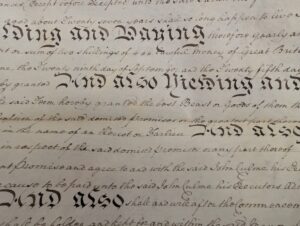
This document, dated 16 October 1789, is a counterpart lease (for 99 years or three lives) for a property with three parcels of land in Culmstock, Devon. The lease is granted from John Culme to the Misses Sarah and Ann Radford. A fee of £30 was due, and a rent of 2s, plus “the best beast or goods” or “three pounds of lawful money of Great Britain in lieu thereof”. The choice was to be John Culme’s “for and in the name of an heriot or farlieu”.
The term “farlieu” occurs less frequently than heriot, and mostly in documents from the southwest of England, where it has many spelling variations (including farliew, farley, and farleave). It can refer to the payment of “best goods” (i.e. moveable property) or a money payment made upon the death of the tenant or sometimes on surrender of a lease.
Photograph: extract from a lease referring to the payment of the best beast or goods.